Organizational Structure
“Organizations’ are structured in a variety of ways, dependant on their objectives and culture. The structure of an organization will determine the manner in which it operates and it’s performance. Structure allows the responsibilities for different functions and processes to be clearly allocated to different departments and employees.” (http://www.learnmanagement2.com/organisational%20structures.htm).
Structures do literally come in all shapes and sizes, and it’s vital for a company to have the right structure in order to maximize their resources, establish communication channels and compliment creativity and flexibility.
There are various types of ‘structures’ business use.

This is a tall structure. For management, there is a narrow span of control, so there is a clear management channel for communication, control and responsibility. Staff also would be clear of the structure of promotion too.
However, due to the narrow structure and communication channels restricts the freedom and potential of responsibility for employees. Moreover decision-making could take longer as employees are required to go through distinct layers of authority.

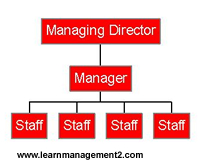
This flat structure only uses one layer of management, which means the ‘chain of command’ short so decision-making between staff and the managing director is short, which can save valuable time if the company were required to meet strict deadlines. Because staff is ‘closer’ to the managing director they are likely to feel more motivated. However, due to the structure having few tiers, there is little scope for promotion opportunities, this also doesn’t work in larger firms as management will have a large amount of staff to facilitate for.

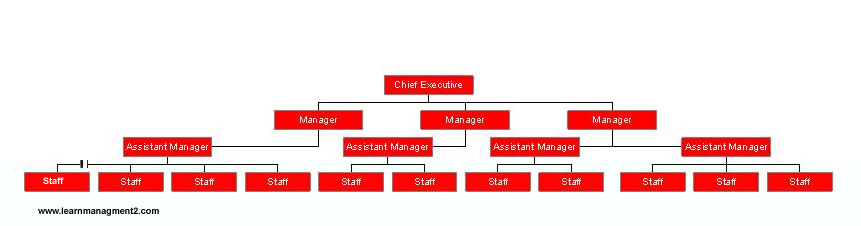
The hierarchical structure is commonly used in a large firm with differentiating departments, such as their HR, marketing and accounting department.
This can also be called a ‘traditional’ structure, promotion paths are clearly defined. Management are also specialized within their department, which helps authority and responsibility. As a result employees are loyal to their organization and especially their department.
Unfortunately, as departments are so narrowly defined, the organization can be bureaucratic and respond slowly to customer needs and change – which may make organizational innovation difficult.
Companies need to establish a clear and well considered business structure so employees and management can maximize their resources, understand the communication channels and what is expected of them. By doing this a correct structure can help motivate employees and drive their creativity, to develop an efficient workforce.
Again an engaged motivated workforce is an innovative workforce.

No comments:
Post a Comment